

Differences: Red vs. Blue LED Effects and Their Pairing
When exploring red and blue LED lights, understanding their distinct effects helps clarify why these two colors are often combined in tailored LED PCB designs. Users search differently for red and blue LED benefits, making it crucial to highlight their unique roles.

Red LED Effects
Red LEDs operate in longer wavelengths (around 620-750 nm), penetrating deeper into materials. This makes them popular for collagen boosting light tech in skin therapy and promoting photosynthesis in plants during critical growth phases. Search terms often focus on red light therapy, skin rejuvenation, and red wavelength illumination.
Blue LED Effects
Blue LEDs, with shorter wavelengths (about 450-495 nm), excel at surface-level applications. They’re effective for antimicrobial effects, acne treatment, and signaling, especially in emergency lighting. Keywords like blue LED acne panels, anti-bacterial blue light, and blue light signaling attract users looking for specific applications.
Why Pair Red and Blue LEDs?
Combining red and blue LEDs on one PCB unlocks synergy benefits—accelerating healing while targeting multiple biological pathways or plant growth stages. This pairing enriches dual wavelength LED therapy, making it more versatile than fixed color LED setups. Pairing also allows precise wavelength tuning tailored to needs, optimized through custom LED circuit boards.
Contrast: Full-Spectrum and RGB Solutions
While full-spectrum LEDs or multi-color RGB LED modules offer broad color and intensity control, they often lack the focused efficiency of dedicated red-blue combinations. Full-spectrum LEDs serve decorative or generalized lighting but may compromise specific biological effects. Custom red and blue LED PCBs provide durability and optimized thermal management focused on targeted wavelengths, which often suits professional and industrial users better.
By focusing on fixed color LED strips that specialize in red and blue, we meet diverse demands—from medical therapy to horticulture and emergency signaling—while supporting SEO trends that reflect user intent.
Ready to dive deeper into the science of wavelengths and practical applications? Let’s explore how these colors impact physiology and functionality next.
Science Behind Red and Blue LED Plant Morphology Wavelengths
Red and blue LED lights target specific wavelengths that affect plant growth and human health differently. Red LEDs usually emit light around 620–660 nm, which is key for stimulating photosynthesis and flowering in plants. Blue LEDs, with wavelengths near 450–470 nm, promote leaf development and strong stems. This distinct impact is because plants absorb these wavelengths selectively for morphological changes.
On the physiological side, red LED light is well-known for its role in boosting collagen production in skin therapy, aiding tissue repair and anti-aging effects. Blue LED light, by contrast, offers antimicrobial properties that make it effective for acne treatment and skin clarity. Using these two wavelengths together on custom red and blue LED PCBs creates a synergy where red light supports cell regeneration while blue light kills bacteria, making the combo highly beneficial for skin health.
This wavelength-specific illumination explains why pairing red and blue LEDs is popular not only in horticulture but also in therapeutic light panels. Each color performs a unique role, yet together they enhance overall effectiveness for targeted biological results.
For those exploring dual wavelength LED therapy or bi-color LED components, understanding these functional differences helps in choosing the right custom LED circuit boards for your project.
Explore more about our tailored solutions in custom LED circuit boards designed specifically for wavelength-specific illumination needs.
Primary Uses: Skin Care, Treatment, and Plant Growth
Red and blue LED lights have distinct roles in skin health, therapy, and gardening, making them popular across different fields. Here\’s a clear comparison of their benefits to help you understand their specific impacts:
| Application | Red LED Effects | Blue LED Effects |
|---|---|---|
| Skin Health | Boosts collagen, reduces wrinkles, promotes wound healing | Fights acne by killing bacteria, reduces inflammation |
| Therapy | Relieves muscle pain and joint stiffness, improves circulation | Antimicrobial effects, helps clear skin infections |
| Gardening | Supports flowering and fruiting stages by stimulating chlorophyll production | Encourages vegetative growth and strong leaf development |
Skin Therapy Benefits
Red LED light, typically around 620-660 nm, penetrates deep into the skin, stimulating collagen and elastin production. This helps reduce wrinkles and fine lines, and aids skin regeneration. Blue LED light, around 460-470 nm, works near the surface to eliminate acne-causing bacteria and calm inflammations. Together, they are often combined in acne treatment LED panels to provide comprehensive skin care.
Horticulture Growth Stages
In plant cultivation, red LEDs are essential during the flowering and fruiting phases because they trigger critical photoreceptors. Blue LEDs promote strong, healthy leaves and compact growth in the vegetative stage. This dual-wavelength approach ensures optimal growth throughout the life cycle, which is why red and blue LED PCBs are widely used in custom LED setups for indoor farming.
For tailored LED solutions combining these wavelengths, exploring professional custom LED circuit boards can improve both efficiency and outcomes in these applications.
Emergency and Vehicle Lighting with Red and Blue LED Lights
Red and blue LED lights play crucial roles in emergency and vehicle lighting, each bringing unique visual signals essential for safety and recognition. Blue emergency signaling lights are highly effective because their wavelength cuts through fog and smoke more readily, making them visible at greater distances. This makes blue LEDs indispensable on police cars, ambulances, and other official response vehicles where quick identification is critical.
Red LEDs complement blue lights by providing a strong contrast that draws immediate attention without causing excessive glare. Together, these dual-color LED components create a distinctive alert pattern that enhances overall visibility and helps pedestrians and drivers quickly recognize emergency situations. This pairing is also popular in traffic control and stop signal applications due to their reliable wavelength-specific illumination.
Beyond safety signals, red and blue LED boards are increasingly used for ambient and mood lighting in vehicle interiors and decorative setups. Their complementary colors can be tuned for specific luminous intensity, creating calming or alert atmospheres depending on the environment. For designers seeking balance between functionality and aesthetics, integrating red and blue LEDs in custom PCB assemblies offers versatility and precision.
For vehicle lighting solutions tailored to emergency signaling or ambiance control, exploring custom LED circuit boards can optimize thermal management and durability, ensuring peak performance under demanding conditions. For detailed guidance on LED design and integration, visit our article on LED light circuit board design to learn more about engineering considerations behind effective red and blue LED applications.
RGB vs Fixed Red/Blue LED Solutions
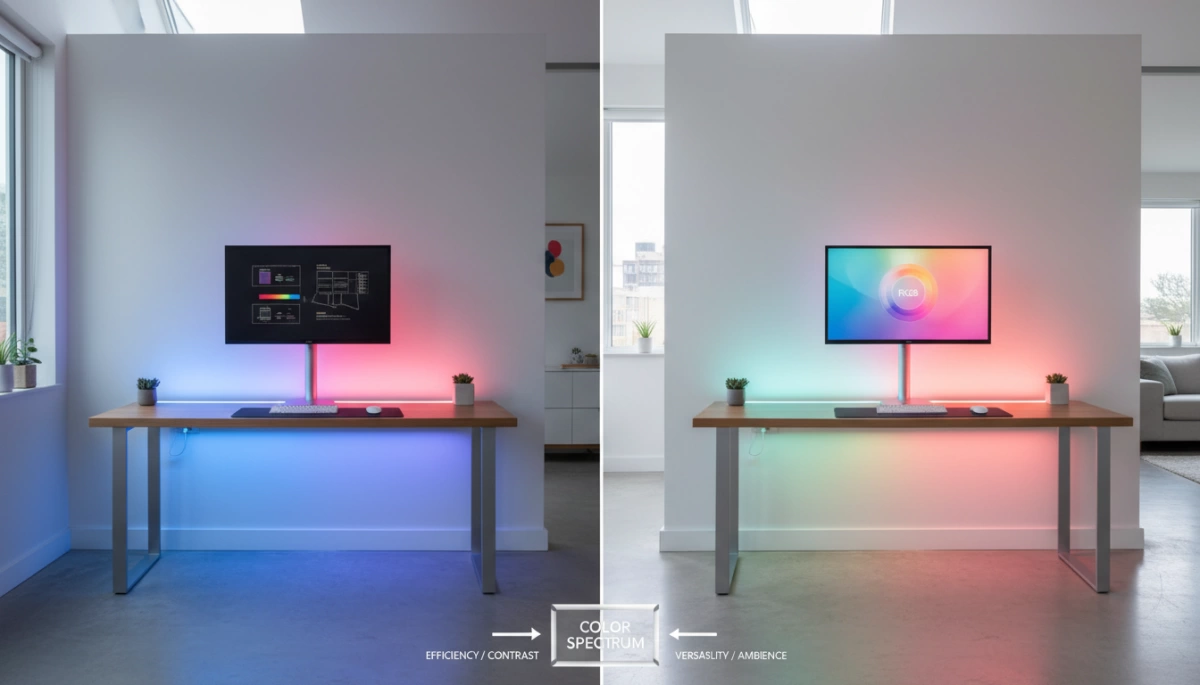
Choosing between fixed red and blue LED lights and versatile RGB setups depends on your application needs. Fixed red and blue LED solutions provide targeted wavelength-specific illumination, making them ideal for applications like skin therapy panels or horticulture growth stages where precise light effects matter most. These bi-color LED components offer simplicity, higher efficiency, and easier thermal management since each LED operates at a dedicated wavelength with optimized power distribution.
On the other hand, RGB LED lights bring flexibility by combining red, green, and blue diodes in one module, enabling a wide color range and dynamic lighting effects. This makes RGB the go-to for ambient, decorative, or programmable lighting applications, such as patriotic LED decorations or mood lighting. However, RGB systems require more complex control circuits and generate more heat, demanding careful thermal management on the PCB level to maintain durability and consistency.
From an engineering standpoint, fixed red/blue LEDs are generally more robust — with less heat buildup leading to longer lifespans and simpler manufacturing processes, such as SMD LED PCB assembly for low voltage LED modules designed for specialized use. In contrast, RGB PCBs need sophisticated luminous intensity tuning and addressable control, which can increase costs and reduce overall efficiency in targeted uses.
In :
- Fixed red/blue LEDs excel in applications needing dedicated wavelengths, superior stability, and simpler board designs.
- RGB LEDs offer unmatched flexibility and colorful effects but trade off some efficiency and thermal performance.
For those interested in custom LED circuit boards optimized for red and blue light, exploring specialized designs can balance these trade-offs effectively. Check out our insights on advantages of aluminum LED PCBs to understand better how heat management can be enhanced in such setups.
By weighing these factors, you can decide whether fixed bi-color or RGB LED solutions best fit your project’s goals and budget.
Key Considerations for Red and Blue LED Lights PCB Design
Designing effective red and blue LED lights PCBs involves addressing several crucial factors to ensure superior performance and reliability. Proper thermal management is critical because both red and blue LEDs generate heat that can reduce lifespan and luminous intensity if not controlled well. Using materials with good heat dissipation and incorporating heat sinks or thermal vias helps maintain stable operation.
Drive distribution is another key point—balancing current flow to each LED color channel prevents uneven brightness and extends component durability. This is especially important in dual wavelength LED therapy setups, where consistent light output impacts effectiveness.
Durability and reliability go hand-in-hand with using quality components and advanced PCB treatments that protect against moisture, dust, and mechanical stress. This guarantees the LED boards can withstand constant use, especially in professional environments like skin therapy clinics or horticultural lighting.
Finally, scalability and consistency are vital for manufacturers and users who require repeatable results in large-scale production or multi-unit installations. Custom LED circuit boards designed for red and blue lights must offer precise luminous intensity tuning and stable color output across batches.
For those interested in more technical insights on robust LED circuit layout, you might find our guide on design considerations for LED circuit boards helpful. This resource dives into thermal strategies and component placement that can optimize your red and blue LED PCB assembly.
By focusing on these design aspects, you ensure your red and blue LED products not only perform well but last longer in demanding applications.
Practical Considerations When Choosing or Implementing Red/Blue LED Lights
When selecting or installing red and blue LED lights, several practical factors come into play to ensure reliable, safe, and efficient operation. First, always prioritize flicker-free output, especially for applications like therapy or workspace lighting, where flicker can cause discomfort or reduce effectiveness. Check datasheets for PWM control or steady current drivers, which help maintain consistent light without annoying flicker.
Evaluating the specifications is critical too. Confirm the wavelength ranges match your needs — typically around 620-630nm for red and 450-470nm for blue LEDs — to get targeted physiological effects or signaling performance. Look for indicators such as luminous intensity and power rating, and consider thermal management capabilities, because overheating drastically reduces LED lifespan and efficiency.
Safety guidelines are another must. Ensure your LEDs come with proper insulation and meet relevant certifications, especially for medical or outdoor use. For humid or dusty environments, choosing IP-rated boards like IP65 or better can protect circuits from damage. When installing, tailor your setup to the environment:
- For indoor therapeutic or horticultural setups, optimize spacing to maximize uniform coverage.
- Outdoors or in vehicles, incorporate protective housings to withstand vibration and weather.
- In emergency or signaling uses, confirm your firmware or light controllers provide fast, stable switching.
Using quality custom red and blue LED PCBs with professional-grade assembly improves reliability and makes scaling easier without inconsistent performance. For optimized system control, pairing your LEDs with precise dimmers or controllers — like a reliable dual dimmer switch for LED lights — empowers you to fine-tune luminous intensity safely and efficiently.
By considering flicker, specs, safety, and environment-specific needs upfront, your red and blue LED lighting implementation will deliver dependable, effective results every time.
Designing with Custom Red and Blue LED PCBs: From Concept to Production
Creating custom red and blue LED PCBs starts with defining essential specifications. You’ll want to consider the wavelength requirements specific to your application—whether it’s skin therapy, horticulture, or signaling—as this impacts both the LED choice and board layout. Key specs include luminous intensity, current ratings, thermal management parameters, and the size or form factor of your PCB.
The fabrication process typically involves selecting high-quality materials optimized for heat dissipation, such as aluminum-based substrates, which help maintain LED performance and longevity. During assembly, precise placement of red and blue LED chips, often surface-mounted devices (SMD), ensures balanced light output and consistent wavelength distribution. Keeping driver circuitry well-integrated and properly designed is essential to avoid flicker and ensure stable operation.
Sourcing components from reliable suppliers guarantees the consistency necessary for professional-grade applications. Many prototypers benefit from working with manufacturers who offer tailored red and blue LED PCB solutions, as they provide expertise on integrating dual wavelength LED therapy elements efficiently.
For those developing complex projects, partnering with a specialist PCB manufacturer experienced in custom LED circuit boards streamlines the transition from concept to production. This approach secures the best chip placement, smooth thermal management, and PCB durability to support both fixed color LED strips and bi-color LED components effectively.
Explore high-performing options like our custom high power aluminum LED PCB or custom LED board services to get started on your tailored red and blue LED light solution. These offerings include full support to ensure your product meets your specific needs with reliable, scalable fabrication.
Partnering for Excellence: Why Choose Custom Red and Blue LED PCB
Choosing custom red and blue LED PCBs brings several key advantages for manufacturers and end-users alike. Here’s why working with a specialized partner matters:
| Benefits | Details |
|---|---|
| Tailored Performance | Custom PCBs optimize wavelength-specific illumination, ensuring ideal red and blue light output for applications like therapy or horticulture. |
| Quality Assurance | Rigorous testing and IP-rated builds guarantee durability, consistent luminous intensity, and thermal management across batches. |
| Engineering Expertise | Skilled design teams balance heat dissipation, drive distribution, and board layout to maximize lifespan and efficiency. |
| Scalability & Flexibility | From prototyping to mass production, custom solutions adapt to your volumes and budget without compromising specs. |
| Client Success Metrics | Proven track records show enhanced product reliability and user satisfaction with red blue light signaling and SMD LED PCB assembly. |
Partnering with a trusted manufacturer gives you full control over materials, LED placement, and drive mechanisms—essential for specialized uses such as dual wavelength LED therapy or emergency strobe PCB applications. Customization supports more efficient and consistent output compared to fixed color LED strips or off-the-shelf RGB setups.
If you want reliable, high-quality red and blue LED circuit boards tailored to your specific needs, explore professional LED PCB assembly services that combine advanced fabrication processes with hands-on support. This collaboration ensures your product stands out in performance and durability—helping you exceed market expectations with confidence.
 English
  Spanish
  French
  Portuguese
  Italian