
Types of LEDs Commonly Used on Flexible PCBs
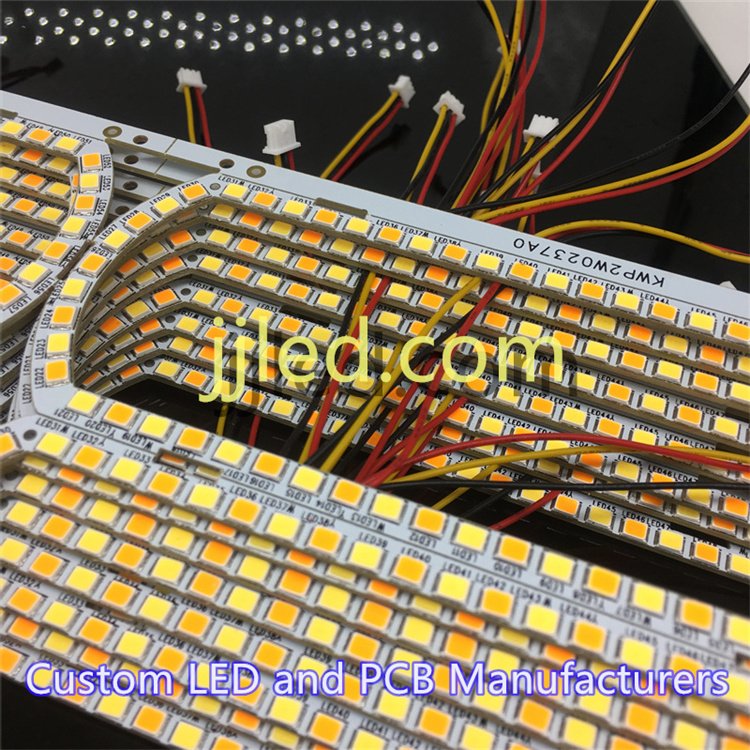
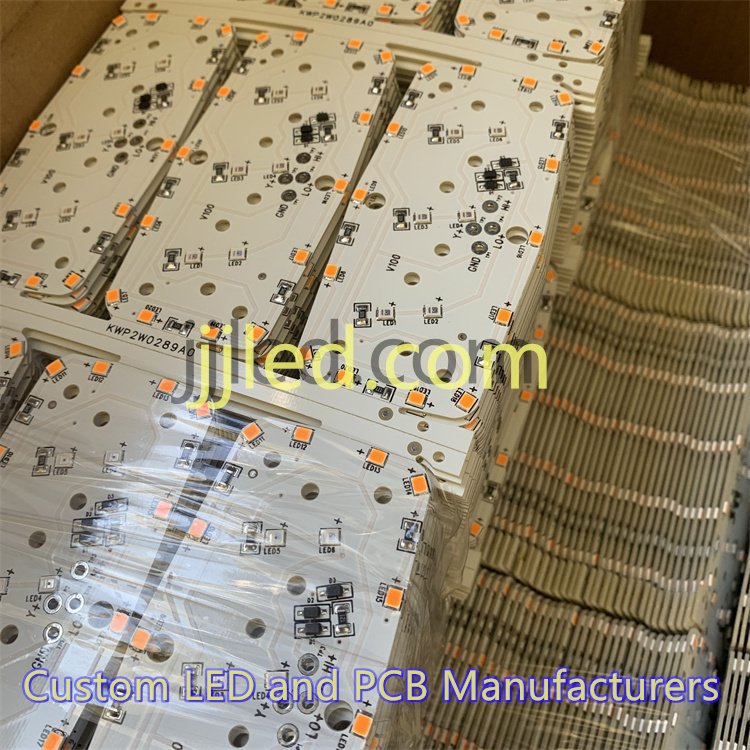
When selecting LEDs for flexible LED PCBs, it’s essential to consider brightness, efficiency, size, and thermal performance. Below are the most common LED types used in LED flexible PCBs, including 2835 LEDs—the favorite for high brightness and low power consumption—and other popular models suitable for various applications.
Popular LED Types for Flexible LED PCBs
2835 LEDs
The most widely used LED for flexible PCBs. Known for excellent brightness and efficiency with a compact size, making it ideal for LED strip PCB flexible designs.
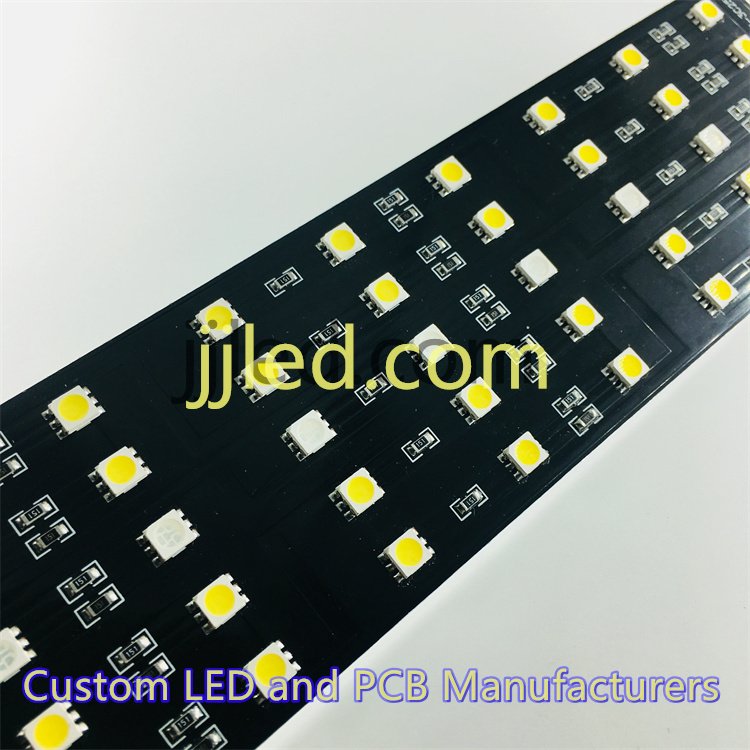
5050 LEDs
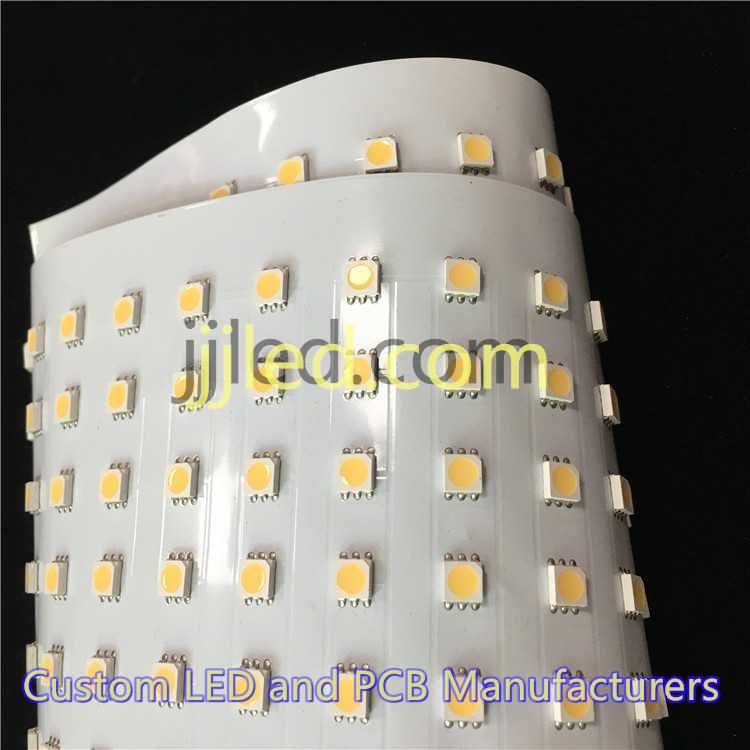
Larger than 2835, these provide brighter light output and often contain three diodes inside one package for RGB or multi-color options but consume more power.
3528 LEDs
Slightly smaller than 5050 and less bright, favored for moderate brightness flexible LED lighting PCB applications with lower power needs.
3014 & 2216 LEDs
Designed for slimmer and more compact LED FPCB assembly. They efficiently balance brightness and size, perfect for thin flexible LED circuit boards.
COB LED arrays
Chip-on-Board (COB) LEDs offer ultra-bright and uniform light. They are excellent for high-density and high-power flexible LED PCBs but require careful thermal management.
Mini-LED and Micro-LED
The newest tech in LED flexible PCB integration, these ultra-small LEDs enable ultra-high-density designs with exceptional brightness, low power, and superior color rendering.
LED Comparison Table
| LED Type | Luminous Efficacy (lm/W) | Power Consumption (mW) | Thermal Performance | Typical Use Cases |
|---|---|---|---|---|
| 2835 | 120-140 | 60-120 | Good | General flexible LED strips |
| 5050 | 100-120 | 250-300 | Moderate | RGB lighting, signage |
| 3528 | 90-110 | 60-120 | Good | Backlighting, low-power strips |
| 3014 | 110-130 | 50-100 | Good | Slim LED strips, displays |
| 2216 | 115-135 | 60-110 | Very good | Thin flexible LEDs |
| COB | 130-150 | 400+ | Requires heatsinks | High-power lighting, medical |
| Mini-LED | 140-160 | 20-50 | Excellent | High-density TVs, wearables |
| Micro-LED | 150-180 | 5-30 | Superior | Ultra-dense, next-gen displays |
2835 LEDs dominate the flexible PCB market thanks to their balance of brightness and efficiency. For compact or specialized designs, smaller LEDs like 3014 and 2216 are great. For ultra-bright or high-density applications, COB arrays or Mini/Micro-LEDs outperform traditional LEDs but require more advanced design and thermal solutions.
Choosing the right LED type is crucial for creating reliable, high-performance LED flexible PCBs that meet your project’s demands.
Materials and Construction of High-Quality LED Flexible PCBs
When it comes to building a durable and efficient LED flexible PCB with LEDs, choosing the right materials is crucial. The base material mostly comes down to Polyimide (PI) or PET. Polyimide is a top choice for LED applications because it handles higher temperatures better and offers excellent flexibility without degrading. PET is cheaper and works for simpler, lower-heat uses but may not last as long or resist heat as well in high-brightness LED setups.
Copper thickness plays a big role too. Common options like 1/3oz, 1/2oz, and 1oz copper layers affect how much current the PCB can safely carry and how well it dissipates heat. For LED strips or boards with many high-power LEDs, thicker copper (1/2oz to 1oz) is recommended to ensure reliable performance and prevent overheating.
Coverlay films and solder masks are essential layers protecting the copper and ensuring good solder joints for SMD LEDs. A quality coverlay prevents moisture and provides mechanical protection, which is crucial for flexible PCBs that bend and flex repeatedly. The solder mask, meanwhile, should be chosen carefully to ensure strong adhesion and withstand reflow soldering processes common with LED FPC assembly.
For sections that need extra rigidity—like connector areas or mounting points—stiffeners are added. These can be made of materials like FR4 or polyimide and help prevent damage during handling or installation while maintaining overall flexibility where it’s needed.
Balancing these materials and construction choices ensures your custom LED flexible PCB will deliver consistent lighting performance and long-term durability. For more on design choices impacting flexible LED circuits, you might check out our detailed design considerations for LED circuit boards.
Design Guidelines for LED Flexible PCBs
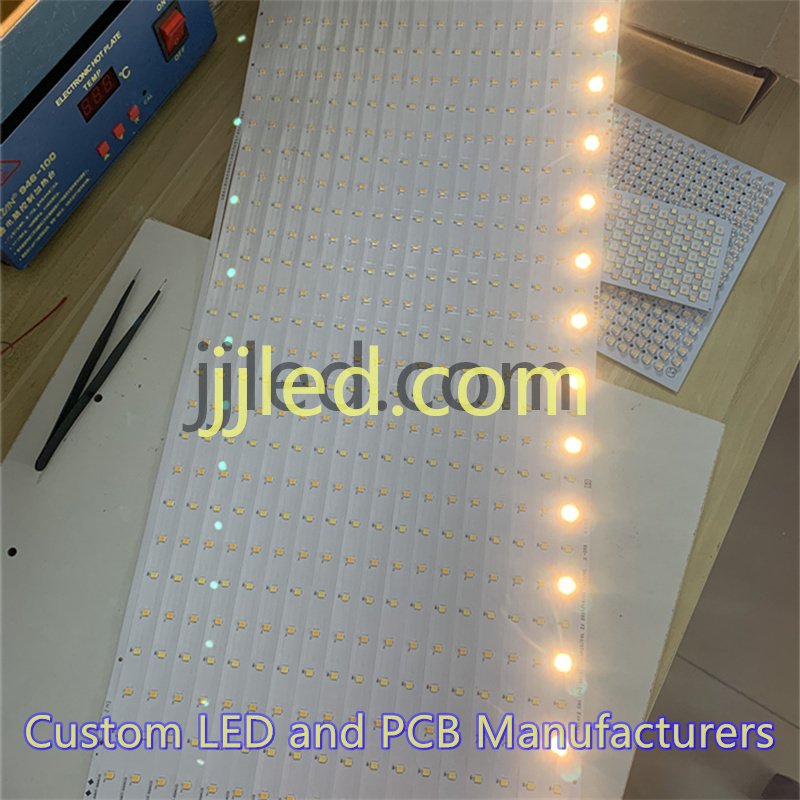
When designing an LED flexible PCB with LEDs, getting the layout right is key to achieving uniform light output and long-lasting performance. Here are some essential tips to follow:
LED Placement for Uniform Light Distribution
- Space LEDs evenly to avoid dark spots or hotspots.
- Consider the viewing distance—closer eyes require tighter LED spacing.
- Use diffusers or coverlays to soften and spread the light evenly across the flexible LED lighting PCB.
Thermal Management
- Integrate copper heatsinks and thermal vias to spread heat away from high-power LEDs, especially with 2835 LED flexible PCBs known for high brightness.
- Thermal pads under LEDs help conduct heat to the base material, reducing the risk of overheating and extending LED lifespan.
- Proper thermal design prevents discoloration and maintains efficiency over time.
Bending Radius and Flex Life
- Maintain a safe minimum bending radius—usually 10 times the PCB thickness—to avoid cracking or damaging circuits.
- Avoid placing LEDs directly on bend areas; keep them on flat zones or include stiffeners for extra durability.
- Design for the number of flex cycles expected in use, especially for wearable LED flexible circuits or thin flexible LED circuit boards.
EMI Shielding and Grounding
- Shield sensitive LED drivers to protect against electromagnetic interference, crucial in high-density flexible LED PCB setups with mini-LEDs or micro-LEDs.
- Ground planes can reduce noise, stabilize power delivery, and improve overall signal integrity.
Impedance Control for LED Drivers
- High-speed LED drivers require controlled impedance traces for consistent signal quality.
- Design your trace width, thickness, and spacing accordingly, especially when integrating PWM dimmer circuits or advanced LED light controllers as detailed in LED driver circuit design resources.
Following these practical design guidelines helps produce reliable, efficient custom LED flexible PCBs that perform well in diverse applications, from automotive ambient lighting to flexible LED signage.
Manufacturing Process: From Design to Finished LED Flexible PCB
The journey from design to a fully functional LED flexible PCB with LEDs starts with precise Gerber file preparation and thorough Design for Manufacturability (DFM) checks. These steps ensure that your flexible LED PCB layout meets all production requirements and prevents issues during assembly.
Next, the SMT LED assembly process takes over, where surface mount LEDs such as 2835 LEDs or COB LED arrays are placed accurately on the flexible substrate. This stage includes reflow soldering to secure components, followed by detailed inspections using Automated Optical Inspection (AOI) and X-ray techniques to catch hidden defects.
Testing is critical to guarantee performance and reliability. Typical tests include:
- In-Circuit Testing (ICT) for electrical connectivity
- Functional Circuit Testing (FCT) to verify operation under real conditions
- Burn-in tests to assess durability
- Optical performance testing to confirm brightness and uniformity
Adhering to industry standards like IPC-6013 and obtaining certifications such as UL helps ensure your LED flexible PCB delivers consistent quality and safety.
For projects requiring tight integration and reliability, working with a trusted flexible LED PCB manufacturer that follows these established manufacturing steps is key to achieving a successful outcome.
Explore more about assembling custom LED boards and their precision control in our detailed guide on custom LED board assembly.
Cost Analysis: What Really Influences the Price of LED Flexible PCBs
When looking at the cost of flexible LED PCB production, several key factors come into play:
- Material Costs: The choice of substrate significantly affects the price. Polyimide (PI) is preferred for durability and heat resistance but costs more than PET. Copper thickness (1/3oz, 1/2oz, 1oz) also impacts price and current handling ability. Of course, the type and quality of LEDs, like 2835 LEDs or COB LED arrays, add to the material cost.
- LED Type and Quantity: High-density boards with mini-LED or Micro-LEDs demand more complex assembly and drive up the price. The number of LEDs per flexible PCB directly affects cost, especially for custom LED flexible PCB orders with specific spacing and colors.
- Order Size (MOQ): Prototype runs are generally more expensive per unit because setup and tooling costs are distributed over fewer boards. Larger production quantities lower the per-unit price but require upfront investment.
- Hidden Costs: Tooling fees, SMT assembly processes, thorough testing like ICT and burn-in, and shipping costs can add up unexpectedly. Ensuring compliance with quality standards such as IPC-6013 and UL certification also contributes to overall expenses.
Tips to Save 20-30% Without Sacrificing Quality
- Optimize LED layout and reduce unnecessary copper usage to lower material costs.
- Choose a balanced copper thickness that meets your current needs without over-specifying.
- Consolidate orders to benefit from volume pricing.
- Work with a manufacturer that offers in-house LED assembly and fast prototyping, cutting out extra logistics and reducing turnaround times.
By focusing on these cost drivers and working with an experienced flexible LED PCB manufacturer, you can achieve a competitive price while maintaining the performance and reliability of your LED flexible circuit boards. For detailed specs and LED options, check out our guide on 2835 LEDs and popular new LED lighting products.
Why Choose Custom LED Flexible PCB as Your Manufacturer?
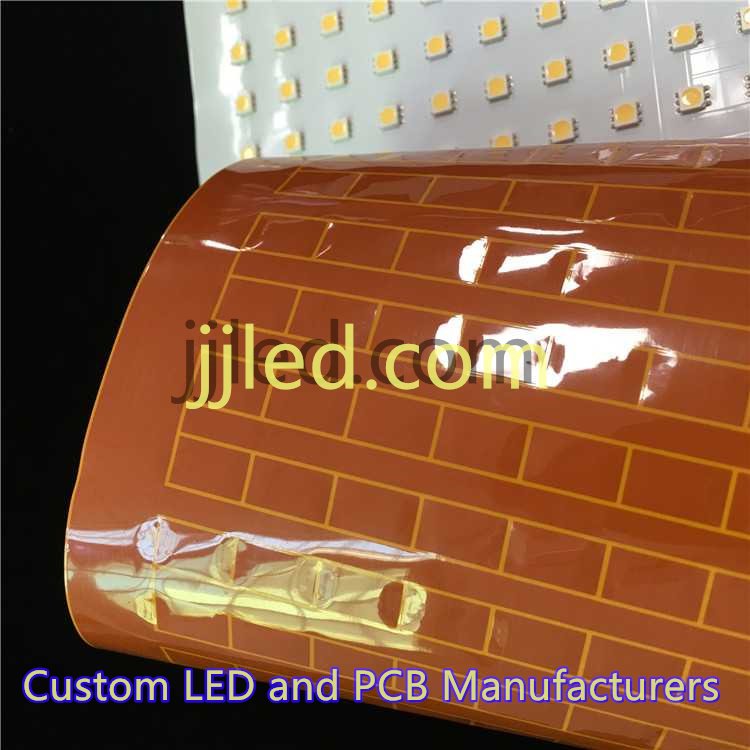
When picking a custom LED flexible PCB manufacturer, experience and capability matter a lot. Here’s why you should choose us:
- 10+ years of specialized LED FPC production — We understand the unique challenges of flexible LED circuits, ensuring top quality every time.
- In-house LED assembly lines — Our full control over the entire process means quicker turnaround and better reliability.
- Fast prototyping in just 3-5 days — Get your LED FPC designs tested and ready to go in no time.
- Full customization options — Adjust LED spacing, color temperature, CRI, and voltage exactly as your project demands.
- Global export experience — We know how to manage international shipping and compliance smoothly.
- Reliable supply chain — Consistent access to high-quality materials including 2835 LEDs, ensuring steady production flow.
| Feature | Benefit |
|---|---|
| Specialized LED FPC experience | High quality, reliable products |
| In-house LED assembly | Better quality control |
| Fast prototyping | Speedy project development |
| Full LED customization | Tailored lighting solutions |
| Global export capabilities | Hassle-free international delivery |
| Steady supply chain | No delays, consistent output |
Choosing us means accessing industry-leading knowledge and a custom service focused on your flexible LED needs. For high-power LED solutions, you might also want to check out our custom high-power aluminum LED PCB options that complement flexible LED designs.
If you\’re working with RGB LEDs or need tailored LED arrangements, our custom RGB PCB LED services are designed to support diverse lighting projects efficiently.
Get in touch to explore how we can deliver your next led flexible PCB with LEDs project on time and within budget.
Real-World Case Studies of LED Flexible PCBs with LEDs
Seeing our custom LED flexible PCB solutions in action helps understand their true value. Here are some real-world examples showcasing how versatile and effective our flexible LED PCBs with LEDs can be:
Automotive Ambient Lighting Project
We supplied a 2835 LED flexible PCB solution tailored for automotive ambient lighting. The flexible circuits fit perfectly within the car interiors, providing uniform, high-brightness illumination with excellent thermal management. This project demanded durability under vibration and temperature changes—our polyimide-based flexible PCBs ensured long lifespan and consistent performance, enhancing the vehicle’s aesthetics and passenger comfort.
Flexible LED Signage for Retail
Retail signage often requires flexible, thin, and bright LED lighting to attract attention. We developed a thin flexible LED circuit board embedded with 5050 and 2835 LEDs for retail lightboxes. The flexibility meant easy installation around curved surfaces, while high-density LED placement guaranteed vivid, eye-catching displays. The signage runs efficiently with low power consumption, meeting demanding commercial requirements.
Medical Wearable Light Therapy Device
In medical wearables, flexibility and reliability are key. We engineered a flexible LED PCB using Micro-LED arrays designed for wearable light therapy devices. Lightweight and bendable, these FPCBs integrate seamlessly with wearable fabrics, delivering precise light dosage. Our expertise in wearable LED flexible circuits ensured patient comfort and device effectiveness, demonstrating how LED flexible PCBs with LEDs can innovate health technology.
These cases highlight the adaptability of flexible LED lighting PCBs across industries—from automotive and retail to healthcare—showing why choosing a specialized flexible LED PCB manufacturer guarantees innovation and quality.
For related solutions, take a look at our work with white light SMD 2835 LED assemblies and custom LED circuits for varied light applications.
Frequently Asked Questions (FAQ) about LED Flexible PCBs
What is the maximum bend radius for LED flexible PCBs?
The maximum bend radius depends on your PCB’s material and thickness, but as a rule of thumb, a bend radius should be at least 10 times the thickness of the flexible PCB. For most LED flexible PCBs, this means avoiding sharp bends and sticking to gentle curves to maintain durability and prevent damage to the LEDs and circuits.
Can I use COB LEDs on flexible PCBs?
Yes, COB (Chip on Board) LEDs can be used on flexible PCBs, especially for designs needing high brightness in a compact area. However, they require careful thermal management due to heat concentration. Our expertise in custom LED flexible PCB assembly ensures proper integration of COB LEDs while maintaining flexibility and performance.
What is the typical lifespan of LEDs on flexible circuits?
LEDs on well-designed flexible PCBs generally last between 30,000 to 50,000 hours, depending on factors like operating current, thermal management, and environmental conditions. Using high-quality materials such as polyimide substrates and proper heat dissipation methods helps extend the lifespan significantly.
How to calculate the power consumption of my LED FPC?
To estimate power consumption for your LED flexible PCB:
- Multiply the forward voltage (Vf) of one LED by the current (If) it draws.
- Multiply that by the total number of LEDs on the flexible PCB.
For example, if one LED runs at 3V and 20mA, and your flexible PCB contains 100 LEDs, total power = 3V × 0.02A × 100 = 6W. This straightforward calculation helps optimize your power supply and thermal design.
For more details on types of LEDs suitable for flexible PCBs, check our article on LEDs for high CRI lighting applications, which offers insights relevant for LED flexible PCB design and assembly.
 English
  Spanish
  French
  Portuguese
  Italian