
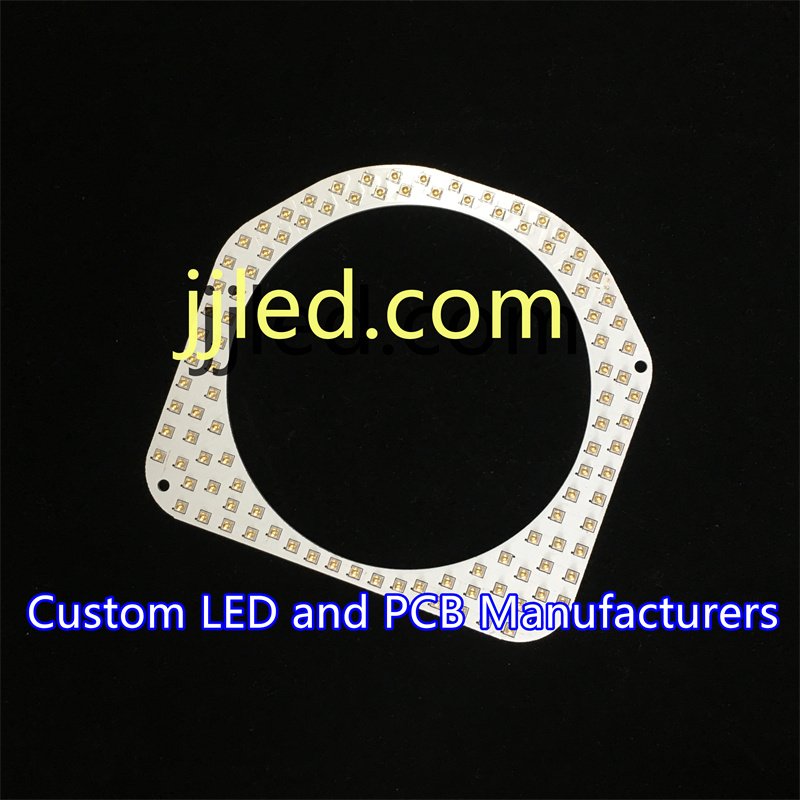
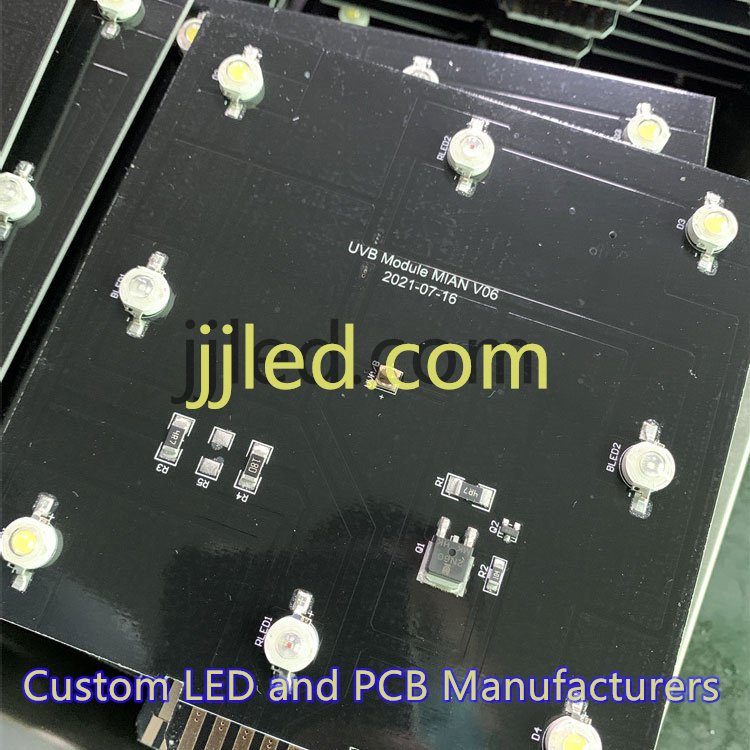
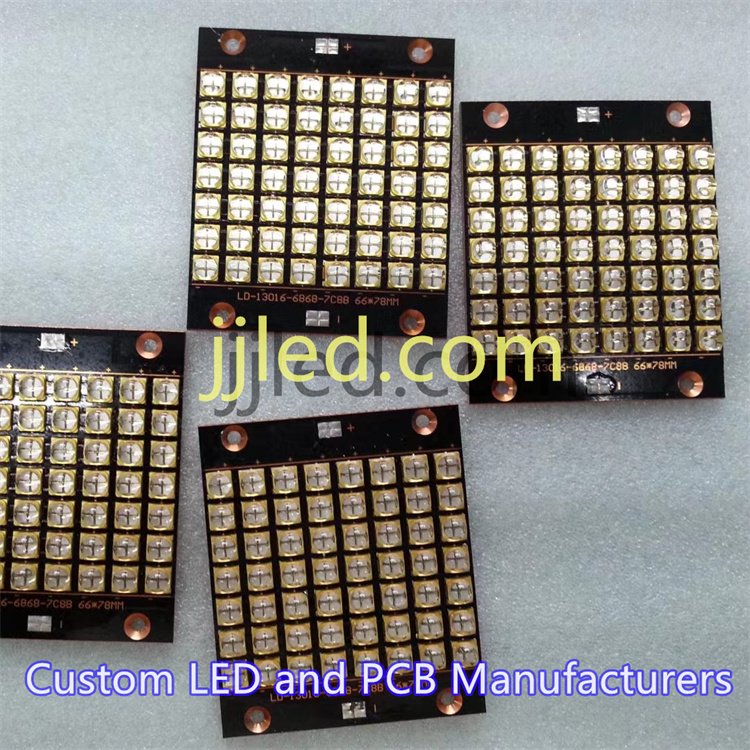
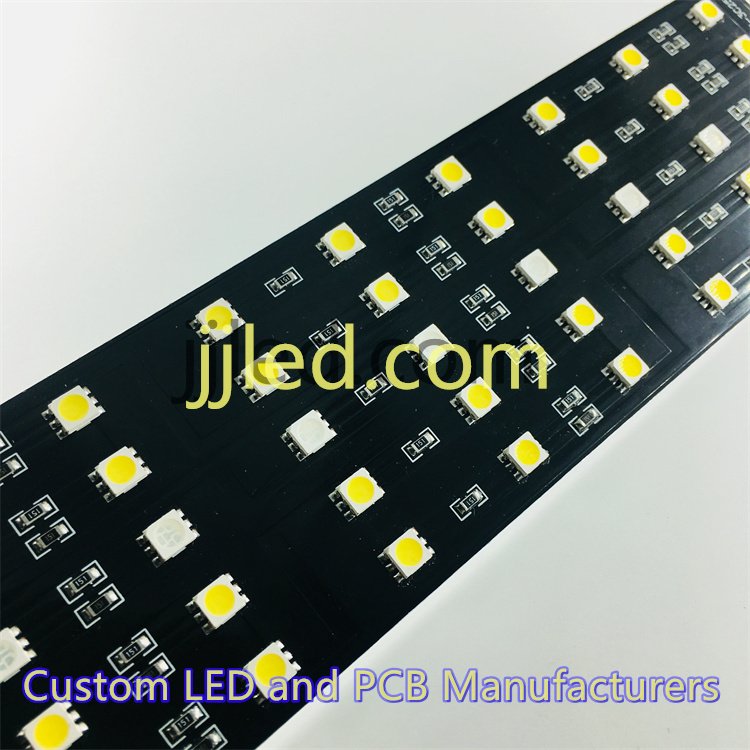
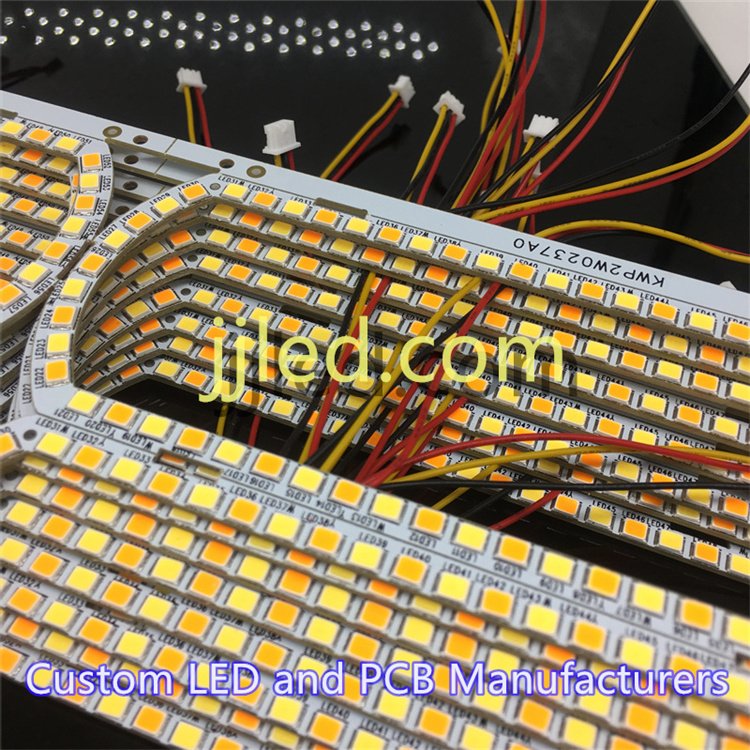
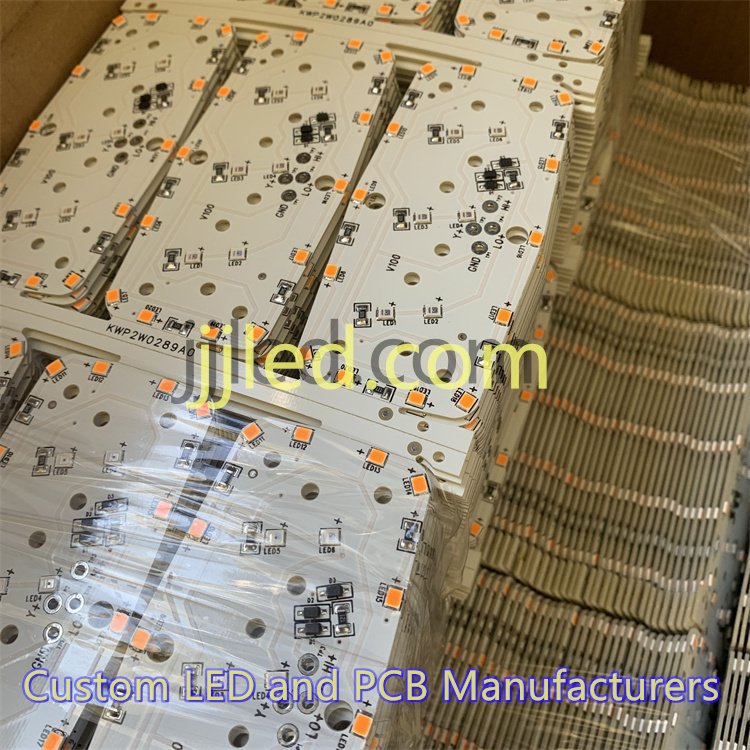
What Is LED Light Main Board Assembly?
If you’re wondering what exactly an LED light main board assembly is and why it matters, you’re not alone. Many ask how it differs from other circuit boards in LED products and why full assembly matters more than just having a bare PCB.
Simply put, the main PCB assembly is the heart of any LED lighting device. It integrates essential circuits like the LED driver circuit, power supply, and control elements necessary to operate the LEDs efficiently. Unlike secondary or auxiliary boards, which might handle sensors or peripheral functions, the main board directly manages the core electrical and control tasks.
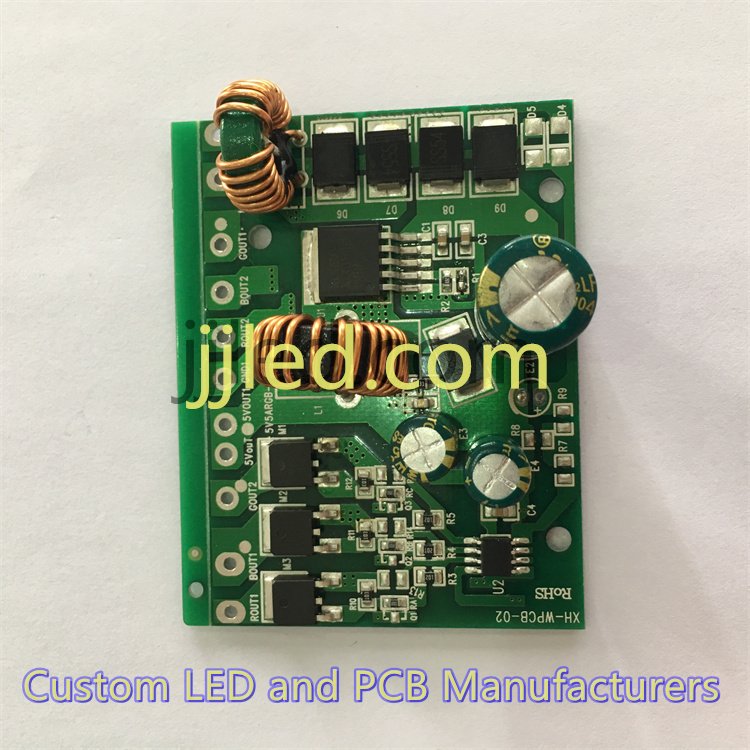
Key Differences: Bare PCB vs. Full PCB Assembly (PCBA)
- Bare PCB fabrication only involves producing the physical circuit board — the substrate with copper traces.
- Full assembly (PCBA) includes mounting electronic components like resistors, capacitors, LED drivers, and connectors onto the bare board using SMT assembly services and other soldering techniques.
This full assembly process transforms a simple board into a functional LED control board ready for installation. The main board’s core functions are:
- Delivering stable power via power supply circuits designed for LED loads
- Regulating current using constant current drivers to protect LED lifespan
- Integrating control circuits, sometimes including microcontrollers for smart, dimmable, or programmable LED features
Understanding this distinction ensures you choose not just a PCB but a complete, reliable LED light main board assembly that supports your product’s performance and longevity.
Key Components of an LED Light Main Board
The foundation of any LED light main board assembly lies in its substrate material. Most often, aluminum core PCBs are preferred over traditional FR-4 boards due to their superior thermal performance. Aluminum helps dissipate heat efficiently, which is critical for maintaining LED lifespan and performance in high-power LED assemblies.
Essential components on the main PCB include LED drivers and constant current sources. These regulate power flow to the LEDs, ensuring consistent brightness and protecting against fluctuations. Capacitors and resistors are also key, stabilizing the circuit and filtering electrical noise. Connectors provide the necessary interface for power and control signals, making assembly and maintenance easier.
For smart or dimmable LED systems, microcontrollers play a crucial role. They manage advanced LED control boards, enabling features like programmable lighting, dimming, and integration with wireless networks. These microcontrollers work closely with power management circuits to maintain stable voltage and current regulation, ensuring energy efficiency and device reliability.
If you want to explore how to fine-tune your LED control boards, checking out detailed guides on LED light circuit board design can be highly beneficial.
How LED Driver Circuits Work on the Main Board
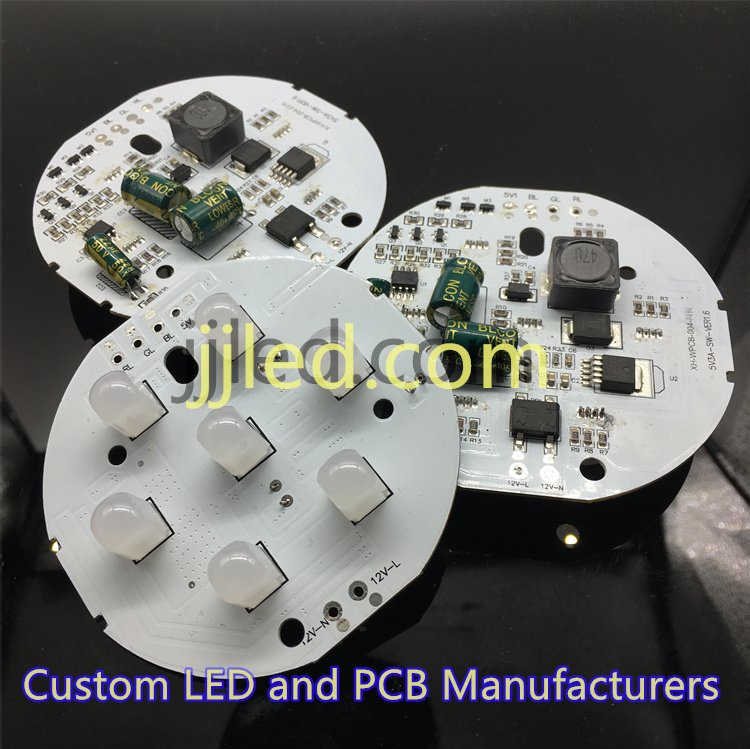
LED driver circuits are essential components on the LED light main board assembly, responsible for delivering the right power to LEDs. Generally, driver circuits come in two types: constant current and constant voltage. Constant current drivers ensure LEDs receive a steady current, which is crucial for preventing damage and extending the LED lifespan. Meanwhile, constant voltage drivers supply a fixed voltage but require external current regulation.
The design of these driver circuits often involves key elements like buck converters, which efficiently step down voltage for power savings, linear regulators for simple and stable control, and pulse-width modulation (PWM) control for dimming and brightness adjustments. These techniques allow precision in managing LED brightness and energy consumption.
Protection mechanisms are built into these drivers to enhance reliability. Features such as over-voltage protection, over-current protection, and thermal shutdown safeguard the LEDs and the whole PCB from damage due to power spikes or overheating. Proper integration of these protections improves the overall performance and longevity of the LED assembly.
Ultimately, a well-designed LED driver circuit on the main PCB directly impacts the energy efficiency, brightness consistency, and durability of LED lighting products. For detailed insights on optimizing LED driver designs, you can explore our guide on LED driver circuit design, which covers these principles in depth.
The LED Light Main Board Assembly Process
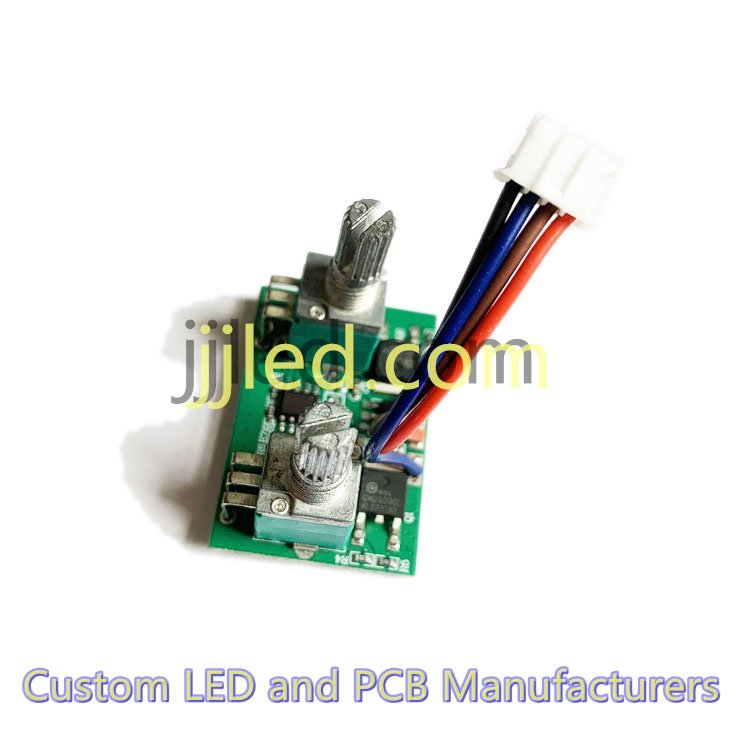
The assembly of an LED light main board involves several precise steps to ensure quality and reliability. It all starts with design and DFM (Design for Manufacturability) review, where the PCB layout is checked to make sure it’s easy to produce without issues. This step helps prevent manufacturing problems and improves yield.
Next, the process moves to solder paste application and stencil printing, where solder paste is carefully applied only where components will attach. Then comes the surface-mount technology (SMT) component placement, using automated machines to position tiny parts like LED drivers, resistors, and connectors right onto the PCB.
After components are placed, the board undergoes the reflow soldering process. Here, the assembly is heated in a controlled thermal profile to melt the solder paste, creating reliable electrical connections. For circuits requiring stronger mechanical support, through-hole assembly might be added, followed by wave or selective soldering to secure these parts.
Quality checks are crucial. Automated optical inspection (AOI) and X-ray testing catch solder defects, missing components, or internal flaws without damaging the boards. Finally, the boards go through functional testing and burn-in, where the LED driver circuit and other electronics are powered for extended periods to confirm performance and durability. A final cleaning removes flux residues, completing the LED light main board assembly.
For professional results, partnering with a manufacturer experienced in SMT assembly services and PCBA manufacturing is essential. This ensures your LED control board meets stringent standards for reliability and performance. Learn more about our specialized LED PCB assembly services for detailed insights into the full process.
Material Selection and Thermal Management in LED Assemblies
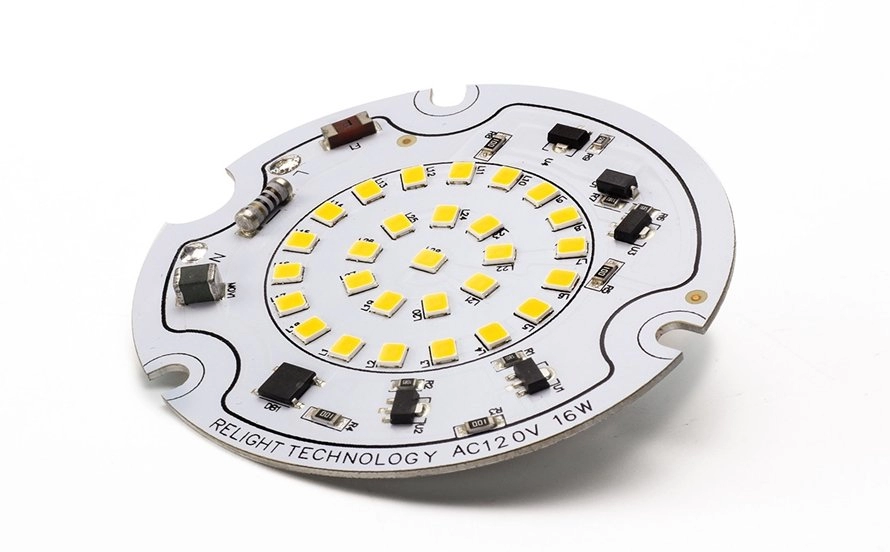
When it comes to LED light main board assembly, material choice is critical for performance and longevity. Aluminum PCBs dominate the market because they offer excellent thermal management compared to traditional FR-4 boards. Aluminum cores help rapidly dissipate heat generated by high-power LEDs, preventing overheating and improving reliability. For a deeper dive into this, you can check out our detailed guide on the advantages of aluminum LED PCBs.
Thermal management doesn’t stop at materials. Design features like thermal vias, heat sinks, and thermal pads are vital to move heat away from sensitive components on the LED control board. These elements ensure the LED driver circuit and other power supply circuits operate within safe temperature ranges.
Additionally, selecting components that can withstand high-temperature conditions is a must. Capacitors, resistors, and microcontrollers used in the assembly should have robust thermal ratings to maintain stable operation under continuous heat stress.
Focusing on the right combination of substrate materials and thermal management techniques guarantees your LED light main board assembly delivers both efficiency and durability in demanding environments. For more on how aluminum LED PCBs are manufactured, see our breakdown of how are LED PCBs manufactured.
Common Challenges and Best Practices in LED Light Main Board Assembly
When working on LED light main board assembly, several challenges frequently arise, but following best practices can keep production smooth and ensure quality.
- Avoid Solder Defects: Watch out for common issues like solder bridging, tombstoning (where components lift on one side), and insufficient solder joints. These can cause failures or intermittent connections in your PCBA.
- Uniform Heat Distribution: Managing heat is critical. Uneven thermal profiles during reflow soldering can damage LEDs and other components. Use proper thermal management PCBs and optimize reflow profiles to prevent LED degradation and extend lifespan.
- High-Volume Production Tips: For larger runs, invest in reliable SMT assembly services, automate inspections with AOI and X-ray testing, and establish strict process controls to maintain consistent quality.
- Prototyping Advice: Early design for manufacturability (DFM) reviews can catch assembly issues before full production. Use small batches to validate solder paste application and reflow profiles on your aluminum PCB board before scaling.
Following these practices minimizes defects and maintains the stable operation of your LED driver circuit and control boards, delivering better results in every LED light main board assembly.
For reliable LED components, check out our selection of high-quality 2835 SMD LED chips designed to perform well under various thermal conditions.
Advanced Features in Modern LED Main Board Assemblies
Modern LED light main board assemblies are no longer just simple circuits; they pack in smart controls and flexible designs that meet today’s tech-driven demands. Here’s what’s trending:
Smart Controls Integration
- Wireless connectivity: Wi-Fi and Bluetooth modules enable remote control and automation.
- Dimming capabilities: Advanced dimmable LED drivers adjust brightness smoothly for energy saving and ambiance.
- Programmable lighting effects: Microcontrollers manage colors, patterns, and schedules for dynamic lighting solutions. For more on microcontroller LED integration, check our detailed insights on LED light controller.
Miniaturization and Flexible Substrates
- Compact designs: Shrinking component sizes allow main PCB assemblies to fit in tighter spaces without losing performance.
- Flexible PCBs: Flexible and bendable substrates expand installation options for curved or irregular surfaces, popular in wearable tech and customized lighting.
| Feature | Benefit |
|---|---|
| Wi-Fi / Bluetooth | Remote and smart lighting control |
| Dimmable LED drivers | Smooth brightness adjustment |
| Microcontroller support | Customizable lighting effects |
| Flexible substrates | Adaptable to unique, space-limited setups |
These features enhance usability and energy efficiency, pushing LED main PCB assembly into a smarter, more versatile future. For specialized boards with integrated dimming and smart controls, explore our PWM LED dimmer controller options.
Choosing a Reliable LED Light Main Board Assembly Partner
Selecting the right partner for your LED light main board assembly is key to ensuring quality, reliability, and timely delivery. Here are the essential factors to consider:
| Key Factors | Why It Matters |
|---|---|
| Experience in SMT Assembly | Familiarity with advanced surface mount technology ensures precise component placement and fewer defects. |
| Turnkey Services | A partner offering full-cycle assembly, from design assistance to final testing, streamlines your production. |
| Customization Capabilities | Specialized manufacturers can tailor your LED driver circuits, power supply circuits, and microcontroller integrations. |
| Testing and Inspection | Comprehensive testing like AOI and functional tests ensure your LED control boards function flawlessly. |
Why Work with Specialized LED PCB Assembly Suppliers?
- Access to expertise in high-power LED assembly and thermal management.
- Better handling of complex requirements such as dimmable LED drivers and smart lighting controls.
- Faster prototyping and scaling for global market needs.
- Improved design for manufacturability (DFM) support, reducing costly revisions.
For reliable custom solutions, our LED PCBA manufacturing services combine experience and quality to deliver LED main board assemblies that meet your exact specifications. Partnering with specialists helps you stay ahead in the competitive lighting market while ensuring your products comply with international standards.
 English
  Spanish
  French
  Portuguese
  Italian