
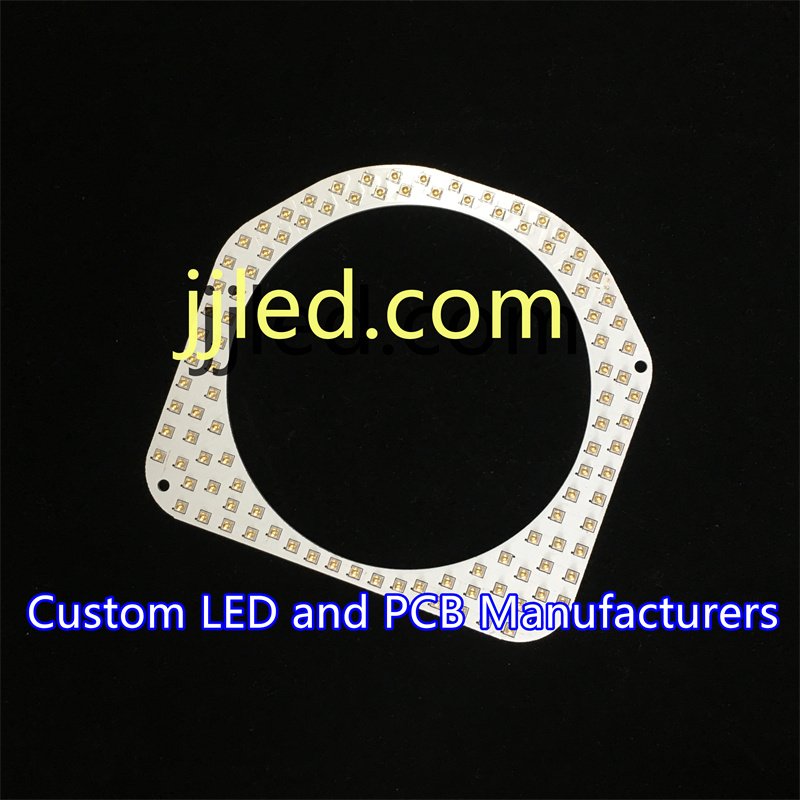
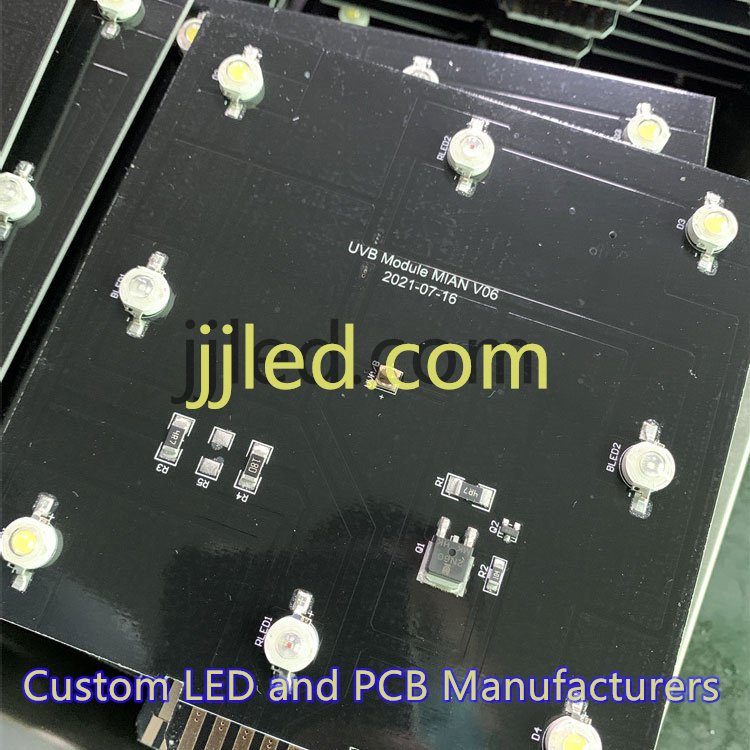
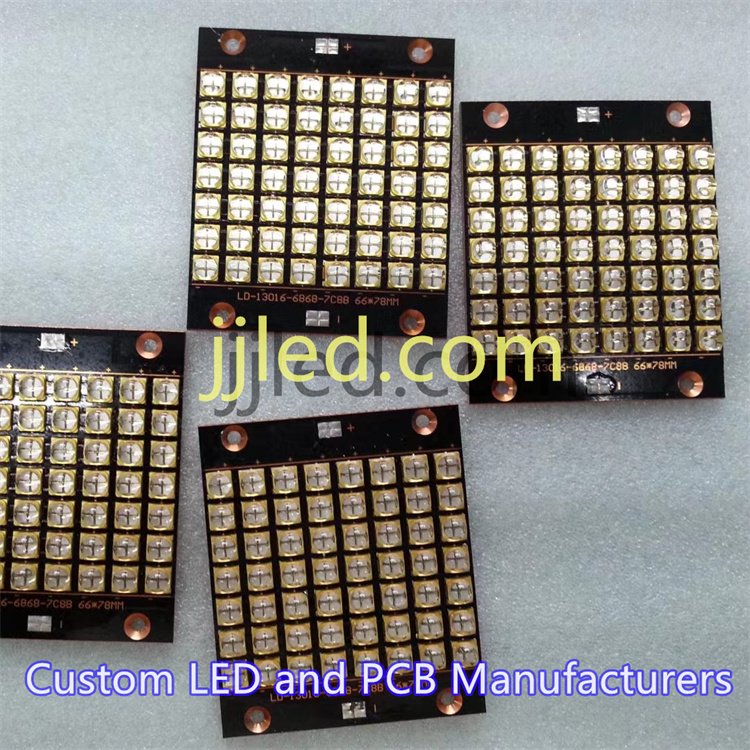
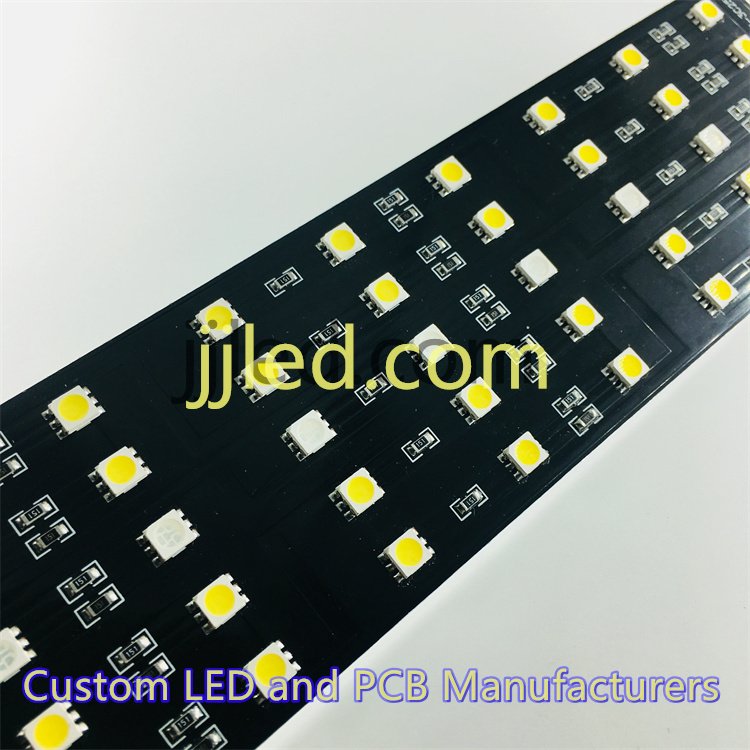
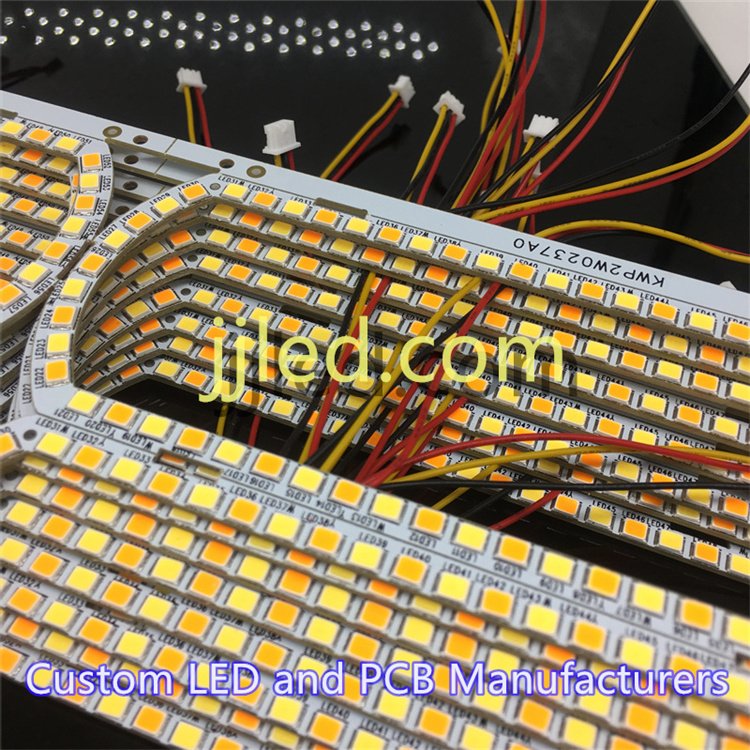
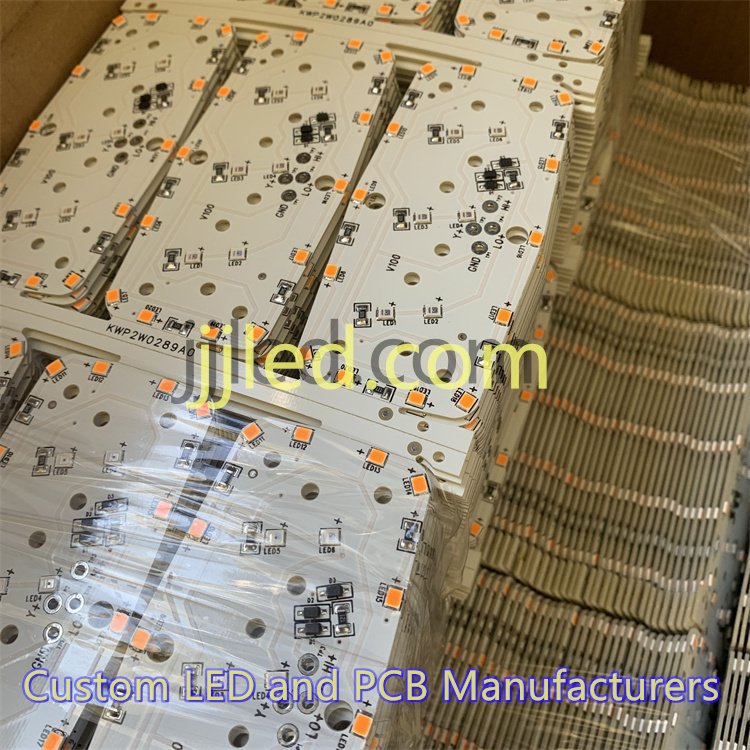
What Is a High-Power Aluminum LED PCB?
A high-power aluminum LED PCB is a specialized metal core PCB (MCPCB) designed to efficiently manage heat generated by high-brightness LEDs. It typically consists of three main layers:
- Copper circuit layer: Conducts electricity while supporting LED placement.
- Thermally conductive dielectric layer: Acts as insulation and transfers heat away from LEDs.
- Aluminum base plate: Provides mechanical strength and excellent heat dissipation.
How It Compares to Other PCB Types
| PCB Type | Thermal Conductivity (W/m·K) | Cost | Durability |
|---|---|---|---|
| Aluminum MCPCB | 1 – 8 | Moderate | High, great heat spread |
| FR4 (Standard PCB) | 0.3 – 0.5 | Low | Lower, poor heat dissipation |
| Copper-core PCB | 1 – 4 | Higher | High but heavier |
| Ceramic PCB | 20 – 200 | Very High | Extremely durable, brittle |
Compared to FR4 or copper-core boards, aluminum LED PCBs offer a balanced mix of superior heat dissipation, moderate cost, and mechanical durability. Ceramic PCBs provide higher thermal conductivity but at a significantly higher price and fragility.
Common Specifications of Aluminum LED PCBs
- Thermal conductivity: 1 – 8 W/m·K, ensuring efficient heat removal.
- Board thickness: Typically 1.0 – 3.0 mm, balancing flexibility and strength.
- Copper weight: Usually 1–4 oz, depending on current requirements and design.
This combination ensures your custom high-power aluminum LED PCB handles heat effectively and supports robust LED lighting circuits without compromising reliability or cost-efficiency.
Key Benefits of High-Power Aluminum LED PCBs
High-power aluminum LED PCBs offer several advantages that make them the go-to choice for demanding lighting applications:
| Benefit | Description |
|---|---|
| Superior Heat Dissipation | Aluminum base and thermally conductive layers quickly draw heat away, reducing junction temps. |
| Extended LED Lifespan | Lower operating temperatures keep LEDs brighter and working longer without efficiency loss. |
| Lightweight & Robust Design | Aluminum provides strong mechanical support while keeping the board lightweight for versatile use. |
| Cost-Effective Production | Ideal for medium-to-high volume runs due to material affordability and manufacturing ease. |
| Environmental Advantages | Helps improve energy efficiency; most aluminum LED PCBs comply with RoHS standards. |
These benefits combine to enhance reliability and performance in LED lighting systems. The effective thermal management LED design ensures less downtime and reduced maintenance costs, making aluminum MCPCBs a smart, sustainable choice.
For more details on how aluminum LED PCBs improve performance, see our guide on the advantages of aluminum LED PCBs.
Applications of High-Power Aluminum LED PCBs
High-power aluminum LED PCBs are perfect for a wide range of lighting applications where heat management and durability are critical. In automotive lighting, these boards are widely used for headlights, taillights, and interior lights, offering reliable performance under demanding conditions. They excel in outdoor and street lighting, thanks to their excellent thermal management, which extends LED lifespan even in harsh weather.
For industrial and high-bay fixtures, aluminum MCPCBs provide the necessary robustness and heat dissipation to operate efficiently in large-scale facilities. In stage and architectural lighting, they enable high brightness and consistent color output, enhancing visual effects without overheating.
Medical settings also benefit from these boards in surgical and medical illumination, where reliability and precise light quality are crucial. Finally, many consumer products like floodlights and grow lights rely on custom high-power aluminum LED PCBs to deliver energy-efficient, long-lasting illumination.
If you\’re interested in automotive-specific solutions, check out our range of reliable tail light LED boards designed for optimal thermal management and durability.
Design Considerations for High-Power Aluminum LED PCB Layouts
When designing a custom high power aluminum LED PCB, managing heat is crucial. Use thermal vias to transfer heat efficiently from the top copper layer down to the aluminum base. Incorporate large copper pours around LEDs to spread heat more evenly. Choosing the right dielectric layer with high thermal conductivity improves heat dissipation while maintaining electrical isolation.
Proper LED placement and spacing help avoid hot spots and ensure even temperature distribution across the board. Keep enough distance between LEDs for airflow and thermal management, but ensure consistent light output.
Calculate trace widths carefully based on current capacity to prevent overheating and voltage drops. Maintain good electrical isolation between high-current traces and sensitive components to avoid short circuits and interference.
Consider the mechanical design of the PCB too. Custom shapes, mounting holes, or countersinks should align with fixture requirements and assembly ease. These details help with secure installation and durability in demanding conditions.
For surface finishes, options like a white solder mask can increase reflectivity and improve overall light output, while finishes such as HASL (Hot Air Solder Leveling) or ENIG (Electroless Nickel Immersion Gold) provide excellent solderability and corrosion resistance.
Watch out for common pitfalls like overcrowding LEDs, insufficient thermal vias, or neglecting mechanical clearances. Follow Design for Manufacturing (DFM) best practices to ensure your aluminum MCPCB is reliable, efficient, and easy to produce.
For a deeper dive into related LED PCB board designs, you can explore specialized resources like our LED PCB board category to understand layouts optimized for high power and thermal efficiency.
Customization Options for High-Power Aluminum LED PCBs
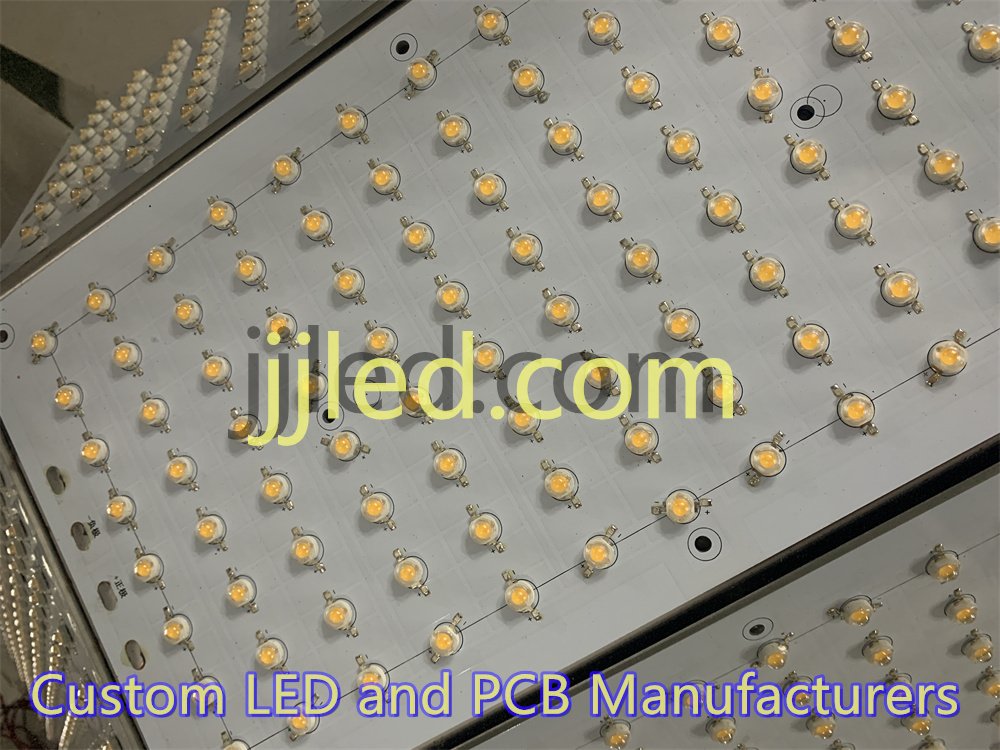
Custom high power aluminum LED PCBs can be tailored to fit your exact needs. Here’s what you can expect:
| Feature | Options & Benefits |
|---|---|
| Sizes & Shapes | Round, strip, irregular shapes to suit your design |
| Layer Configurations | Single-sided, double-sided, or hybrid layers |
| Aluminum Alloys | High thermal conductivity alloys like 6061 for better heat dissipation |
| Dielectric Materials | High-performance dielectrics that boost thermal transfer |
| Integration | Compatible with SMD LEDs, drivers, and connectors for an all-in-one solution |
| Production Scale | Easy to move from prototypes to large-scale manufacturing |
By customizing your aluminum MCPCB, you get a board that matches your design specs precisely while ensuring optimal thermal management for high brightness LED setups. For example, pairing with efficient SMD 2835 LEDs ensures even better performance—check our range of SMD 2835 LED options to find the best match.
This flexibility helps in industries from automotive LED PCBs to street lighting, providing the right balance of size, shape, and functionality to meet specific application demands.
Manufacturing Process and Quality Standards
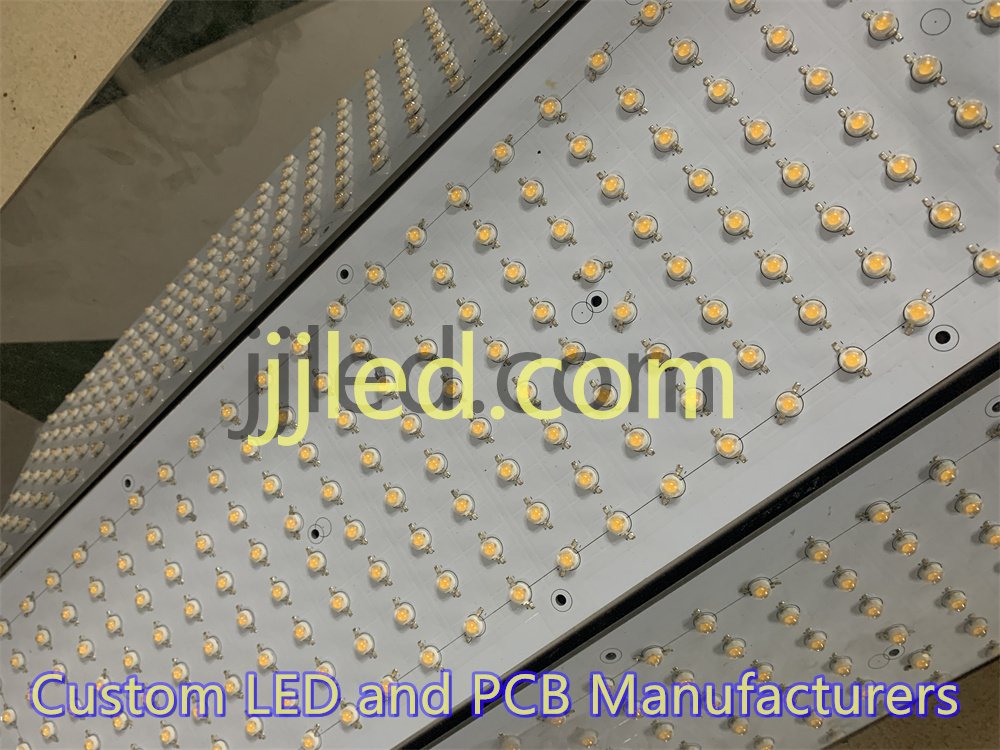
The manufacturing of custom high power aluminum LED PCBs involves several precise steps to ensure performance and durability. It starts with material selection, choosing the right aluminum base and high thermal conductivity dielectric to optimize heat dissipation. Next comes lamination, where the copper circuit layer is bonded to the aluminum substrate under heat and pressure. After lamination, etching defines the copper traces, followed by drilling holes for vias and mounting points. The process concludes with finishing, including surface treatments like white solder mask or HASL/ENIG for electrical reliability and improved reflectivity.
Quality standards play a crucial role in producing reliable aluminum MCPCBs. Certifications such as ISO 9001, UL, and IPC Class 2 or 3 validate the manufacturing process and product consistency. These standards ensure the board meets industry requirements for durability and safety.
Thorough testing for thermal performance, electrical integrity, and mechanical reliability is essential. This includes checks for proper heat management, copper trace continuity, and solderability of the LED lighting circuit board. By adhering to strict manufacturing processes and quality standards, we deliver aluminum base LED boards that guarantee longevity and stable operation across applications.
For more details on how LED PCBs are manufactured, you can visit our guide on the LED PCB manufacturing process.
Choosing a Reliable Manufacturer and Supplier
When looking for a custom high power aluminum LED PCB manufacturer, focus on these key criteria:
| Criteria | Why It Matters |
|---|---|
| Experience in LED PCBs | Ensures expertise with thermal management and LED circuit boards |
| Fast prototyping | Speeds up design validation and time to market |
| Supply chain stability | Guarantees consistent quality and on-time delivery |
Partnering with a specialized aluminum MCPCB manufacturer brings significant benefits:
- Deep industry know-how: They understand high thermal conductivity PCB needs for LEDs.
- Better quality control: Specialized plants maintain tight tolerances.
- Customization support: They can advise on dielectric selection, thermal vias design, and LED layout.
- Reliable after-sales service: Faster resolution of issues.
Tips for Requesting Quotes and Samples
- Provide clear specs: board size, copper weight, thermal conductivity needed (1-8 W/m·K).
- Ask for prototype lead times and MOQ (minimum order quantities).
- Request sample PCBs to test in your application, especially for heat dissipation and electrical reliability.
Choosing the right partner ensures your high-power aluminum LED PCBs match your performance and budget needs. For a trusted source, consider manufacturers experienced in aluminum base LED boards and thermal management LED applications. For more insights on LED PCB options and suppliers, check out this detailed guide on LED PCBs.
 English
  Spanish
  French
  Portuguese
  Italian